Mostrando entradas con la etiqueta HEALTHY FOOD. Mostrar todas las entradas

miércoles, 27 de abril de 2016

RECIPES...TRY SOME OF THESE!

 TRY SOME OF THESE DELICIOUS RECIPES FOR OUR NEXT SCHOOL DAY (MAY 5TH)


Remember:


BROWNIES

 
Gingerbread Man Cookies Recipe
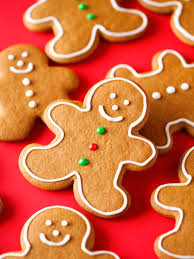

You will need:
Green and red smarties to decorate
Gingerbread cookie cutter
125g softened butter
½ cup brown sugar
½ cup golden syrup
1 egg, separated
2 ½ cups plain flour
1 tbs. ground ginger
1 tsp. mixed spice
1 tsp. bicarbonate of soda
How to make:
1.Beat butter and sugar in a bowl until pale and creamy. Add
golden syrup and egg yolk and beat until combined.
2. Stir in the flour, ginger, mixed spice and bicarbonate of soda. Turn onto a lightly
floured surface an
d knead until smooth. Cover with plastic wrap and allow to rest in
the fridge for 15 minutes.
3. Place the dough between 2 sheets of baking paper and roll out until about 4mm
thick. Cut our gingerbread man shapes with cookie cutter and place onto baking trays.  Repeat with any excess dough.
4. Bake in oven for 10 minutes or until brown.
5. Remove from oven and transfer to a cooling rack.
6. Decorate with Smarties and draw on gingerbread face, arms and legs with a skewer or blunt knife.

Microwave Plum Cake
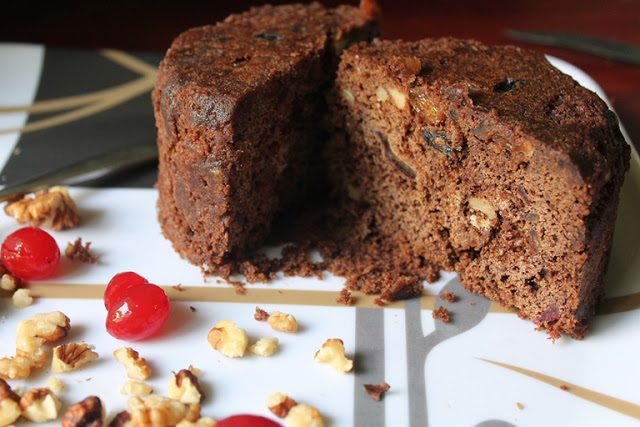


Preparation Time : 15 mins
Baking Time : 5 mins
Resting Time : 1 hour or overnight in fridge
Makes : 2 small round cake

Ingredients:

All Purpose Flour  - 1 1/4 cup / 150 grams
Cocoa - 3 tblspn
Baking soda - 1/2 tsp
Sugar - 1/2 cup / 100 grams
Oil - 1/4 cup / 60 ml
Dates syrup / Honey / Molasses - 4 tblspn
Dried Fruits - 1/2 cup (Raisans, Dates, Tutti Fruity, Cherry, Sultanas)
Nuts - 3 tblspn (I used Walnuts & Almonds)
Water - 1/2 cup / 125 ml

Method:

Take water in a microwave safe bowl and cook for a min till the water is hot.

Add in dried fruits and nuts and let it steep for 5 mins.

In the meantime, take flour, cocoa, baking soda in a bowl and mix well.

Now take the dried fruits soaked mix, add in sugar, oil, dates syrup and mix well.

Add the flour mix into this and mix well.

Take a microwave safe bowl, brush all side with oil. Pour the batter in, dont fill too much, just fill half way.

Put in microwave and cook for 5 mins. When it is done. Leave a standing time of 5 mins.

Remove it from oven, if it is risen too much, just pat it down a little.

Allow it to cool completely.Now put in fridge for 1 hour or so.

Now invert it, slice and serve.
Easy Christmas Fruit Cake


Christmas Fruit Cake without alcohol

Prep time - under 15 mins
Bake time - approximately 1 hour
Yields -7 * 3 1/2 inch loaf pan and another 4 inch disposable baking tray


Ingredients needed

Butter - 150 grams
Sultanas -125 grams
Currants - 125 grams
Cashew nuts - 100 grams
Tutti frutti - 50 grams
Brown sugar - 130 grams
Dry ginger powder - 1 tsp
Cinnamon powder -1 tsp preferable or 2 inch piece
Baking soda/Cooking soda - 1 tsp
Water -1 1/4 cup
Eggs -2
All purpose flour/Maida - 300 grams
Baking powder - 2 tsp

Preparation

Grease and dust the baking pan and keep it ready.

Sift flour and baking powder together and keep it aside.

Method

Mix all the dry fruits and nuts in a bowl. Dust it with a tsp of flour and keep it ready.
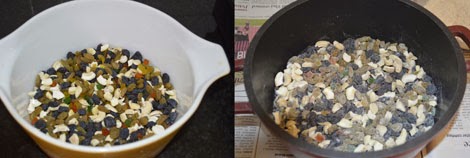
dry fruits and nuts


Add baking soda, sugar, water, butter, dry ginger powder, cinnamon powder and cook over medium flame until it boils.

boiling fruits and nuts for fruit cake


Simmer for 2-3 minutes after it boils. Then remove from heat and let it cool completely. If you have used cinnamon stick instead of powder, remove the cinnamon pieces once it cools down completely.
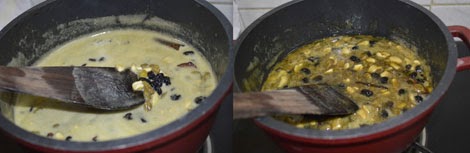
preparing easy fruit cake


Once the mixture has cooled, you can pre heat the oven at 180 degree C for 15 minutes.

Beat 2 eggs lightly with a fork and add to the cooled mixture. Beat egg into the mixture until well combined. I used the electric hand beater at low speed.

adding eggs to fruit cake mixture


Fold in flour+baking powder mixture gently until well combined.
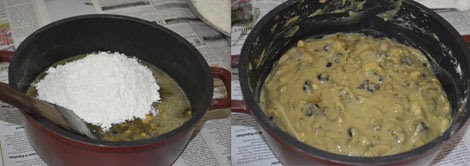
how to make plum cake


Pour mixture into the greased tin and spread it out evenly with a spatula. Alternatively you can tap the tin for the mixture to settle evenly.

Bake for 1 hour or until a skewer inserted in the center of the cake comes out clean.

Once baked, cool it and then invert the cake. Delicious, soft, moist and yummy Christmas Fruit Cake/Plum Cake without alcohol is ready.

Note - You can omit tutti frutti if you do not prefer it, but see to it that the dry fruits and nuts mixture comes around 400 grams. Beginners kindly check out Baking Tips for Beginners before baking any cake.

Spices can be adjusted by adding little less or a little more to suit your taste.

The cake tastes best after 1 or 2 days of aging. The cake will keep at least for a few days.

how to make fruit cake


Tablas de medida y equivalencias en repostería


Para empezar, en recetas norteamericanas o inglesas encontrareis con mucha frecuencia la palabra cup. Un cup es una taza, pero para nuestras recetas reposteras no sirve cualquier taza… No!! No cojais esa taza que os regalaron en el supermercado comprando una caja de cereales, ni cualquier taza de desayuno… Un cup es un  recipiente donde caben 250ml de un líquido. A la venta hay disponibles unas cups que equivalen al volumen exacto de líquido, de manera que si usamos una receta donde nos digan que contiene 1 cup de leche usaremos esas cups para saber el volumen exacto de leche que necesitamos. En definitiva: aunque 1 cup de leche no pesa igual que un cup de azúcar sí ocupan el mismo volumen y es eso lo que nos pide la receta y lo que deberemos usar. Sé que puede resultar un engorro, hay a quien le encanta trabajar con recetas en cups, a mí personalmente no me gusta y tiro de báscula, pero a veces no me queda más remedio que usar cups, y por ello creo que tener un juego de cups (o más) es básico. ¿Dónde se consiguen? pues actualmente hay en bastantes tiendas de menaje de cocina, incluso en algunas tiendas de chinos. Como siempre, qué juego comprar depende del presupuesto que tengais. A mí me gusta tener material repostero de calidad, pues es para mi uso exclusivo y sé el trato que le voy a dar, pero es mi opción personal. Hay cups de metal y de plástico (normalmente las de plástico son más económicas). Se venden en juegos de varias cups: 1 cup, 1/2 cup, 1/3, 1/4  de cup… Es bastante práctico que vengan varias cups en un mismo juego, esto nos evitará el tener que andar usando una sola cup para todo.

Utilizar las cups es sencillo. Para medir el volumen de un líquido sólo hay que hacer llegar el volumen de líquido hasta la marca correspondiente de nuestro juego de cups. Para ingredientes secos el principio es el mismo:  en este caso con el revés de un cuchillo o con una espátula eliminaremos el exceso de ingrediente seco pasándolo por la superficie del cup hasta que quede bien nivelado.

La otra medida que se utiliza con frecuencia es el tablespoon (= tbsp/ TBSP), nuestro equivalente a una cucharada sopera. El teaspoon (= tsp) equivaldría a una cucharadita de postre. Sin embargo, estas equivalencias no son exactas, por lo que  para evitar errores en las recetas hay que usar cucharas medidoras. Se trata de unos juegos de cucharas (similares a los juegos de cups) donde encontramos habitualmente 4-5 cucharas de distintos tamaños con distintas medidas (1 Tsp, 1tsp, 1/2 tsp…).

Tomando como referencia mis libros de cabecera de repostería americana e inglesa y los datos de equivalencias y medidas de algunos blogs interesantes (Cooking with girls, Blaukitchen, Whats cooking America y Epicurious)  a continuación os dejo unas tablas donde podreis consultar las medidas más habituales y sus equivalencias en mililitros, litros, gramos y Kg. Creo que es de mucha ayuda cuando se nos atasca una equivalencia que no sabemos exactamente a que volumen o peso corresponde. En caso de dudas siempre os aconsejo que volvais a pesar vosotros mismos los ingredientes.

Cups


Teaspoons/Tablespoons


 Temperatura horno


Tamaño moldes


 Huevos


Cantidades necesarias según molde

Otras equivalencias


NOTAS:

  • Para medir en cups el azúcar glass deberemos tamizarlo antes de pasarlo a nuestras cups y a continuación enrasar tal y como he comentado con anterioridad.
  • En cuanto a las cantidades necesarias por molde creo hay que tener en cuenta estas consideraciones:
      • El número de porciones y la cantidad de frosting necesario para tartas redondas y cuadradas está basado en una tarta de dos capas tipo layer cake usando buttercream como frosting de cobertura. La cantidad de frosting que necesitemos variará en función de la consistencia del buttercream.
      • El volumen de masa tiene importancia para evitar hornear bizcochos demasiado delgados y  frágiles.
      • En cuanto al relleno, la tabla está basada en volúmenes para finas capas de relleno. Si usamos buttercream deberíamos doblar cantidades y así aumentar espesores.
      • La cantidad de fondant (pasta de azúcar) de la tabla hace referencia a la cantidad necesaria sólo para cubrir la tarta y no para realizar decoraciones adicionales. Esta cantidad variará dependiendo del grosor que elijamos para el fondant.
  • Para terminar adjunto un par de enlaces que a mí me resultan de utilidad:
    • en caso de dudas a la hora de pasar a gramos algún ingrediente que no encuentro en las tablas anteriores pinchando en este enlace encontramos una página bastante completa donde aparecen todo tipo de ingredientes: mantequilla de cacahuete, sour cream… A veces lo uso para asegurarme (por ejemplo: en principio no tienen la misma densidad la mantequilla convencional y la mantequilla de cacahuete).
    • tomando como referencia las tablas anteriores este enlace permite comprobar la cantidad de fondant necesario para cubrir una tarta, cuantas porciones conseguir en función de la forma de una tarta… Muy útil! 

    Source:  http://www.undolcunivers.com/

miércoles, 4 de noviembre de 2015

50 IDIOMS ABOUT FRUITS AND VEGETABLES

Food, one of the necessities of life, figures often in traditional expressions. Fruits and vegetables, specifically, account for some of the most familiar idioms, including the following.

Fruit

1. To compare “apples and oranges” is to uselessly compare unlike things.  
2. The “apple of (one’s) eye” is a favorite or well-like person.  
3. To say that “the apple never falls far from the tree” is to suggest that a person’s personality traits are close to those of the person’s parents.  
4. “As American as apple pie” means that something is quintessentially representative of American culture or values.  
5. “(As) sure as God made little green apples” suggests certainty. 6–12. To be a “bad apple” or a “rotten apple” is to be a bad person. Meanwhile, to say that “one bad (or rotten) apple spoils the whole bunch (or barrel)” implies that one flawed element or person can undermine an effort or a group, and to be “rotten to the core” is to be thoroughly bad or worthless.  
13–14. “How do you like them apples?” (or “How about them apples?”) is a neutral or taunting comment, depending on the context, that refers to an undesirable state or situation.  
15–16. To “polish (one’s) apple” is to flatter someone; a flatterer is an “apple polisher.”  
17. To “upset the apple cart” is to ruin plans.  
18. A “banana republic” is a weak or corrupt country.  
19–20. A “second banana” is a subordinate, and the “top banana” is the leader.  
21–22. To “go bananas” is to become excited or crazed, and “to drive (someone) bananas” is to annoy or irritate someone.  
23. Something in “cherry condition” is excellently maintained or restored.  
24. To “cherry-pick” is to select carefully.  
25. “Life is a bowl of cherries” means that life is easy.  
26. To “not give a fig” is to be unconcerned.  
27. A “lemon” is a flawed or worthless item; the idiom often refers to a vehicle.  
28. “Melon” is sometimes used as slang for head or, vulgarly, for large breasts.  
29. To say that someone or something is a “peach” means that they are beautiful, excellent, or sweet.  
30. When everything is “peaches and cream,” life is going well.  
31. A “plum” assignment or job is a highly coveted one.  
32. One is said to have “sour grapes” when one belittles something one covets but cannot obtain.


Vegetables

33–36. To be “full of beans” is to talk nonsense, and to “not know beans” is to be ignorant or uninformed. To be “not worth a hill of beans” is to be worthless, and to “spill the beans” is to tell a secret. 37–38. To “dangle a carrot” before someone is to encourage them with an incentive, and the carrot in “carrot and stick” is an incentive or reward. (The stick is the punishment.) 

39. A “carrot top” is a red-haired person.  

40. Someone “as cool as a cucumber” is very self-possessed under pressure.  

41. To “pass an olive branch” is to make peaceful or reconciliatory overtures.  

42. A “pea-brained” person is stupid.  

43. Fog or something else very dense can be described as being “as thick as pea soup.” 

44. To be “like two peas in a pod” is to be very close with or similar to someone.  

45. To be “in a pickle” is to experience complication.  

46. A “couch potato” is someone who spends an excessive amount of time seated watching television or playing video games.  

47–48. A “hot potato” is a controversial or difficult issue, but to “drop (someone or something) like a hot potato” is to abandon the person or thing.  

49. Something that is “small potatoes” is insignificant. 

50. “Salad days” refers to the youthful period of one’s life.


Fruits and vegetables figure occasionally in figurative references to color, such as “beet red” (the color of embarrassment), or descriptions of specific hues, like “cherry red,” as well as other comparisons, including “pear shaped.” The words fruit and vegetable themselves appear occasionally in idiomatic phrases, including the following:


  • To “bear fruit” is to produce results.
  • “Forbidden fruit” is something attractive but not allowed.
  • The “fruits of one’s labors” are the results of the person’s efforts.
  • To “become a vegetable” is to be rendered physically disabled or to virtually cease physical activity.

Source: http://www.dailywritingtips.com
 

INVENT A STORY WITH FRUIT OR VEGGIES AS MAIN CHARACTERS (2ºeso)


martes, 3 de noviembre de 2015

Advice on how to prepare food safely

Why should I eat fresh fruit and vegetables? 


Fresh fruit and vegetables are an important and necessary part of a healthy and nutritious diet. They provide many vitamins and minerals to help keep your body healthy.


What should I look for when buying fruit and vegetables? 

When shopping for fresh produce, avoid items that are bruised, damaged, mouldy, slimy or show signs of damage from insects.

When buying pre-cut fresh fruit and vegetables, avoid damaged items and open or torn packages. Make sure that the items are properly refrigerated (ie less than 5 degrees). Check use by dates on all packaging and make sure that you eat them before the due date.

Always keep fruit and vegetables separate from raw meat, poultry and seafood. Blood and juice from raw foods could contaminate fruit and vegetables with bacteria.


How should I store my fruit and vegetables?


Fresh produce should be refrigerated as soon as possible after peeling or cutting. Leftover cut produce should be discarded if left at room temperature for more than four hours.

Prevent fruit and vegetables from coming into contact with raw meat, poultry and seafood. Make sure you keep fruit and vegetables in the crisper or on a shelf above these foods so there is no risk of blood and juice dripping onto fresh produce.


What should be refrigerated and what can be left at room temperature? 


Fruit and vegetables, in particular fresh cuts, should be kept in the refrigerator at less then 5 to maintain optimum freshness and ensure food safety.

Some vegetables and fruit do not require refrigeration, such as:

  • Bananas
  • Garlic
  • Onions
  • Potatoes
  • Pumpkins
  • Swedes and potatoes

The following vegetables and fruit can be kept at room temperature until ripe and then refrigerated:
  • Apricots
  • Avocados
  • Kiwifruit
  • Mangoes
  • Melons
  • Nectarines
  • Papaya
  • Peaches
  • Pears
  • Plums
  • Tomatoes

What can I do to minimise risk?


Wash all fruit and vegetables with cool tap water immediately before eating. Do not use soap water or detergent as this can affect the taste.

Scrub fruit and vegetables with hard surfaces (such as rock melons, oranges, potatoes and carrots) with a clean produce brush. Cut away bruised or damaged areas before eating.
How should I prepare my fruit and vegetables?

Cut away damaged or bruised areas on fresh fruit and vegetables, as bacteria can grow in these areas. Clean the knife when finished to avoid contaminating other food.

Use clean cutting boards and utensils when handling fresh fruit and vegetables to avoid cross contamination. Where possible, use a clean cutting board for fresh produce and a separate board for raw meat, poultry and seafood.

Be sure to clean your hands thoroughly with soap and water before handling fresh fruit and vegetables. Thoroughly wash all equipment and avoid using sponges or dish clothes as these are difficult to keep clean and may help spread bacteria.

Please Note: The information above has been provided by the NSW Food Authority, for further information on food safety or to download the "Safe Handling - fresh fruit & vegetables" fact sheet please visit www.foodauthority.nsw.gov.au

Source:  http://www.freshforkids.com.au/

SHORT FRUIT AND VEGETABLES STORIES (2ºESO)

Create short stories about fruit and vegetables as in the following examples

F - Fun for everyone  
R - Really tasty 
U - Unreal! A whole stack of fruit  
I - It’s so healthy  
T - Tasty & healthy are the most important thing for everyone
V - Very Healthy  
E - Eat the lot  
G - Gobble them all up  
I - Interesting Vegies  
E - Every single one of them is so scrumptious  
S - So Sweet

Juicy Oranges

Oranges, oranges
oh so juicy oranges.
Nothing but like it but
cooling the body.
So eat up or drink
your very healthy juicy oranges
and stay healthy
all day long!


Pineapples

I have a pineapple that sits in a tree
Sitting there very gracefully
Full of vitamins and all things good
You should try one if you could
But when I came out to see
It wasn't there for me
I think that it looked so nice
Someone took it in a trice


The Orangey Story

One day Mr Orange, Mr Banana, Mrs Plum and Mrs Apple were cleaning the farm and feeding the animals.

It wasn’t an easy job. The chooks kept running around and squawking and the pigs put mud on Mrs Plum every time.

"Oh no, my beautiful dress. It’s covered with mud" Mrs Plum would always complain.

"Stop complaining. This is the farm’s way of life. Quit waiting and finish the work Mrs Plum", Mr Orange explained, "If you want to help, STOP COMPLAINING OKAY".

"Okay, okay" Mrs Plum would say.

One day the farm animals were making such a noise no one worked that day.

‘What a racquet!" Mrs Apple said.

Suddenly Mr Orange brought up a brilliant idea. "We could have a farm choir. I could teach the animals to sing!".

Mr Banana brought up a point. "But birds and animals don’t sing."

"So what. It will be so so cool" Mr Orange answered.

It took weeks and weeks to perform the Alleluia song, but finally it was perfect. That night Mrs Plum, Mrs Apple and Mr Banana came to the show. They all brought ear muffs just incase the noise became terrible. Suddenly the show started, so they all put on their ear muffs. But when they started singing, it was a miracle - they sang beautifully. Soon it was the end of the show. All of the fruits were clapping and screaming "hooray, hooray".

This year was very busy for Mr Orange who arranged the show.